|
|
| Setup and Planning |
Write the needed instruments in the upper left hand
corner of the first page! |
|
Put needed accessories on table (in front of you)
for each piece |
|
Setup according to the diagram; modify if needed for
each piece |
|
Bring your own stick bag |
|
Use an Assignment Sheet to track who plays what and
what is needed for each piece |
|
|
| Timpani |
Use a pitch pipe to tune timpani |
|
Tune up to the note |
|
Play 3” from the edge |
|
Roll slower on low notes, faster on high notes |
|
Use upstroke |
|
Tune base note to 32-D, 29-F, 26-Bb, 23-D |
|
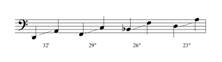 |
|
|
| Bass Drum |
Generally at 30°
angle |
|
Use left side muffle only for marches; other times
be certain to muffle left side at ensemble cut-off |
|
Play BD/Cym accents loudly in marches |
|
|
| Snare Drum |
Use larger sticks for field drum |
|
Turn off snares when not in use |
|
|
| Small Instruments |
Hold all small instruments at eye level |
|
Use cord mallet on woodblock |
|
Use triangle vibrato on slow music |
|
|
| Tambourine |
Use knuckles for loud and finger tips for soft |
|
Start shake rolls with a knuckle or finger tip |
|
Turn 15°
sideways so jingles don’t sound after playing |
|
|
| Suspended Cymbal |
Roll on opposite sides of cymbal (9
o'clock & 3 o'clock) |
|
Use upstroke, not like on drumset crash |
|
|
| Crash Cymbals |
Aim leading edge 2” into other plate, not to edge;
keep left plate stationary, move right plate into leftone edge hitting
before the other, creating a "flam" feeling (but not a
"flam sound!) |
|
|
| Gong (Tam-tam) |
Warm up with light taps before striking |
|
|